


As Omnicom folds major agencies under one roof, industry insiders say the consolidation will hit holding-company talent hard but open the door for indies to win new business.
Omnicom Oceania told Mediaweek they cannot comment on how many local jobs will be impacted after confirming more than 4,000 roles globally will go.
In Australia, DDB will merge with Clemenger BBDO, creating a single, unified national agency under the Clemenger BBDO name.
In New Zealand, DDB Group and FCB Group will merge to form McCann Group NZ, a new unified creative & media agency network.
Mediaweek reached out to some of the nation’s top industry experts for their take on what the merger means for both the big and the little guys.

Darren Woolley, CEO of global marketing management consultancy TrinityP3, said job losses are not good news at any time.
“The timing here, just before the holiday season, is difficult for those individuals and their families and loved ones thrown into financial uncertainty,” he said.
“But the truth is this is an inevitable consequence of an industry impacted by technology, particularly AI, and which has never addressed the weakness of the business model embraced with the loss of media commissions.
“Michael Farmer’s Madison Avenue Manslaughter is deepening as the major holding company groups come to terms with the transformation that was required a decade or more ago.”

Melanie Spencer, group CEO at Thompson Spencer, said the retirement of brands like DDB and FCB marks the end of an era.
“These agencies have shaped our creative landscape for decades, and their legacy deserves recognition,” she told Mediaweek.
“But the bigger picture is what we’re seeing globally: the democratisation of every industry. Speed, future-forward thinking, and new creative models are winning, not just scale.
“That’s why we built our agency, Thompson Spencer, the way we did. Clients today want partners who can move fast, take risks, and innovate without the drag of legacy structures. The new world rewards agility and creative thinking over bureaucracy.”
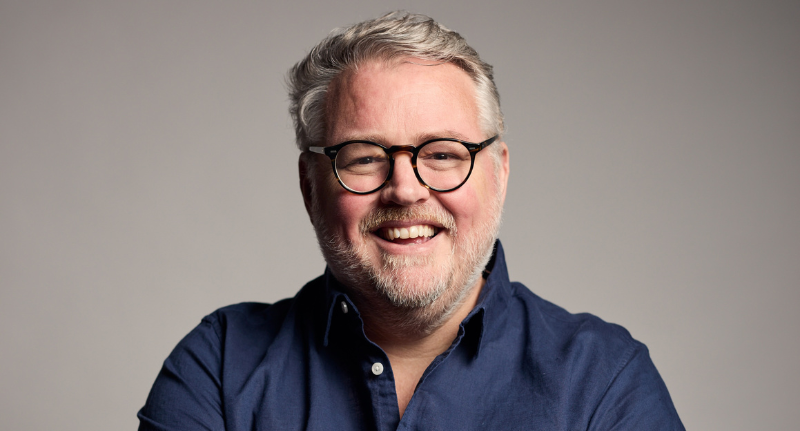
Adrian Mills, CEO of ATime&Place, said it’s big news for the creative business and clients who still believe in the power of creativity.
“Not long ago, the global networks were the pinnacle of creative ambition in Australia,” he said.
“But years of reshuffling across WPP, Omnicom, Publicis and IPG’s creative agencies have made something unmistakably clear: that ambition now thrives outside the holding-company model.
“The overall size of the job losses, relative to natural attrition, may not seem huge, but even a modest reduction in creative roles will be felt in our smaller, already fragile Melbourne market.”

Julia Vargiu, director, Australia, at SI Global, said her heart goes out to the thousands of people who woke up today to the news that their agency no longer exists.
“DDB, FCB, MullenLowe – these are not just names on a masthead. They are creative homes built over the course of decades. Retiring them is not reinvention. It is restructuring. A $9 billion deal with $750 million in projected cost synergies tells you everything you need to know. This is about survival, not growth,” she said.
“At SI Global, we see this as a clear inflection point. Holding groups are consolidating because their margins demand it. Meanwhile, global buyers are shifting toward digital-first, AI-literate and founder-led specialist firms – not because they are big, but because they are focused. The market is polarising. You are either consolidating, or you are becoming more valuable.”
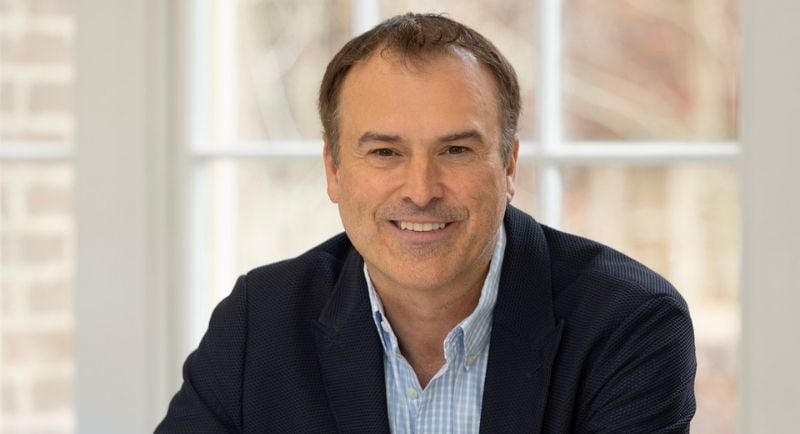
James Wright, group CEO at HAVAS, said we are now firmly in a fast-forward mode in an age of consolidation.
“Time will tell whether it will work out, but you have to hope so; they have had a long time to organise themselves with their smartest people working on it and thinking about how to do it,” he said.
“With the sunsetting of some very famous brands, it does feel like we have lost a lot of the personality and originality that our industry needs more than ever to stay relevant.
“Yes, things have changed and continue to at pace, be this how we create and deliver work, or what clients want to pay for. But I ask, do clients and the industry want a giant super group or do they want a partner that can move fast and make them feel important?”
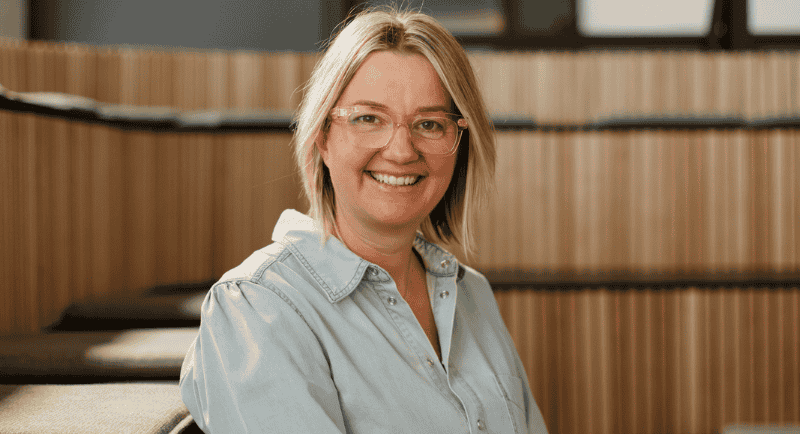
Jen Sharpe, founder of Think HQ, said there are always changes after acquisitions, but the scale and speed here is “remarkable.”
“Consolidation for consolidation’s sake is not good for the diversity and creativity of our agency ecosystem in Australia, and it’s hard to see an upside from this perspective right now,” she said.
“Diversity doesn’t seem to be a watchword more broadly, with just one woman (that I can see!) in the newly configured Omnicom senior leadership globally. You’d hope this won’t trickle down to the leadership here.
“There will be some tricky questions more broadly around procurement and how exactly the remaining agencies across disciplines will operate, while the thorny issue of how agencies that no longer exist can deliver will need to be thrashed out.”
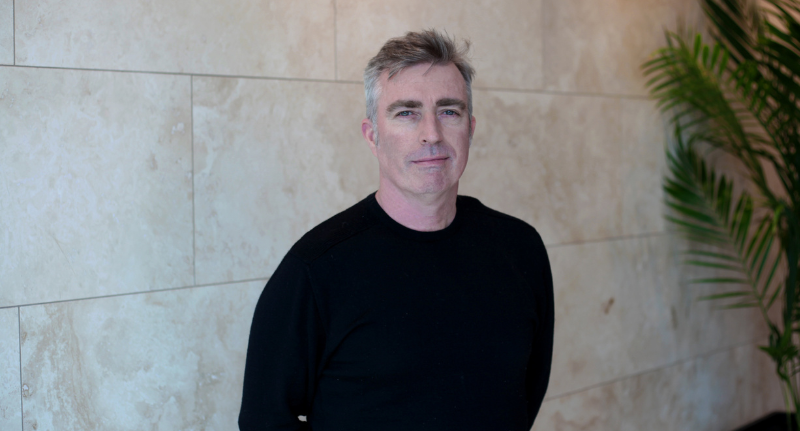
Simon Teagle, CEO of IMANZ, said the real risk of the merger lies with clients, who have not asked for the change and may now consider taking their business elsewhere.
“They appointed the agency for a set of reasons, and if their criteria are no longer being met, they need to do what’s right for their business and rehome with an agency that does,” he said.
“Clients should be super critical of the changes agency management wishes to bestow on them. If they don’t perceive they will achieve better outcomes, clear differentiation from competitor brands that have joined their agency or be paired with talent they can build strong relationships with, then that should be the catalyst for review.
“This merger brings uncertainty and stress for agency staff. But it brings massive opportunities for NZ advertisers to explore the many benefits that indie media agencies can offer their business.”

Alex Radford, co-founder of D3, said the Omnicom-IPG merger is proof that the global holding company model has shifted from creative to financial engineering.
“For clients, it signals something more critical: a massive distraction that will inevitably dilute creative quality and speed,” he said.
“You cannot cut that deep or merge cultures that are that distinct without severing the relationships and local nuance that actually drive results.
“For New Zealand, this merger widens the gap between global processes and local reality. It creates a ‘vanilla-isation’ of the market – less choice, less competition, and generic templates replacing bespoke thinking.”